
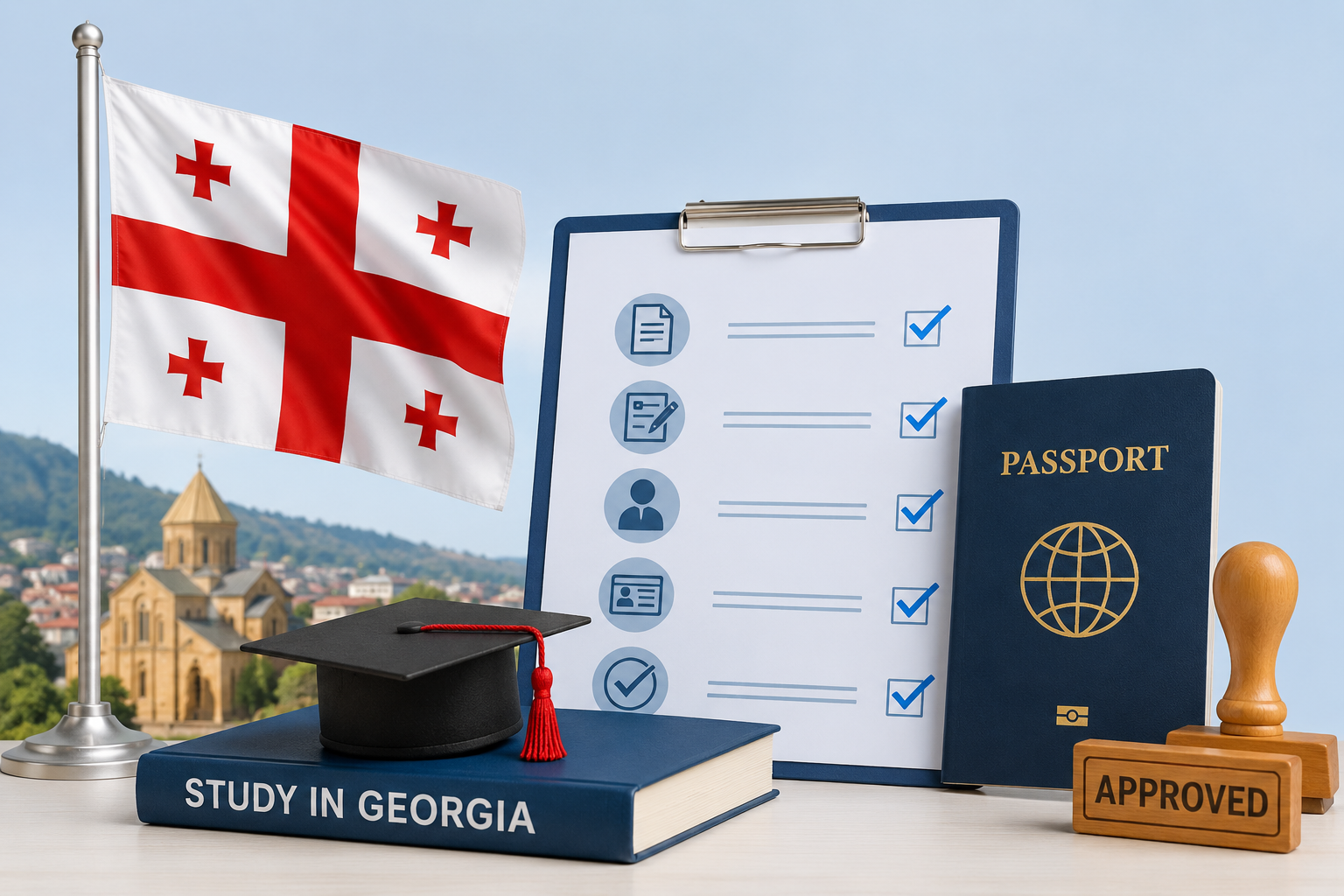
Georgia — the small, stunning country nestled between the Caucasus Mountains and the Black Sea — has quietly become one of the most sought-after study destinations for international students. Affordable tuition fees, English-taught programs aligned with the European Bologna Process, and a genuinely welcoming culture make it an increasingly attractive alternative to crowded Western study hubs.
But before you pack your bags and head to Tbilisi, you need to navigate the Georgia student visa process correctly. Getting it wrong can delay your studies, complicate your legal status, or cost you money you didn’t budget for. This guide breaks it all down — the visa type, the documents, the timelines, the residence permit, and the tips that actually matter.
Why Georgia in 2026?
Before diving into paperwork, it helps to understand why tens of thousands of international students choose Georgia every year:
- Affordable tuition and living costs compared to most European and North American alternatives
- English-medium programs across medicine, business, IT, law, and social sciences
- European ECTS / Bologna-aligned academic credit system, making degrees internationally recognized
- A straightforward, well-documented admission and visa process
- A safe, growing international student community with year-round mild weather in most regions
For Indian students in particular, Georgia has become a top destination for medical degrees — and the visa process, while bureaucratic, is very manageable when you know the steps.
Step 1: Understand Which Category You Fall Into
The very first thing to determine is whether you actually need a visa to enter Georgia at all. Georgia has one of the more open visa policies in the region.
Category 1 — Visa-Free Entry (up to 1 year): Citizens of 94 countries, including India (under certain bilateral arrangements), the USA, EU nations, and many others, can enter Georgia without a visa and remain for up to one year. However — and this is critical — visa-free entry does not automatically give you the right to study legally. If you plan to stay for the full duration of a multi-year degree, you still need to formalize your status.
Category 2 — D3 Student Visa Required: If your country is not on the visa-free list, you must apply for a Category D3 Immigration Visa (study visa) before entering Georgia. This visa is issued for an initial duration of 90 days and is the essential prerequisite for obtaining a Student Residence Permit once you arrive.
Even if you qualify for visa-free entry, most universities and immigration advisors strongly recommend applying for the D3 visa before departure. It creates a cleaner legal pathway and avoids complications when you later apply for your residence permit.
Step 2: Get Your University Admission in Order
You cannot apply for a Georgia student visa without first being formally admitted to a recognized Georgian university. This sounds obvious, but many students try to rush the visa before locking in their enrollment — which wastes time and risks rejection.
What you need from your university before starting the visa process:
- Acceptance/Admission Letter confirming your enrollment in a full-time program
- Rector’s Order — a formal document from the university’s rector acknowledging your enrollment
- Invitation Letter — issued by the institution, addressed to the consulate or embassy
Well-known institutions like Ilia State University, Tbilisi State Medical University, the University of Georgia, and others have dedicated International Students Departments that assist with exactly this documentation. Reach out to them early — ideally three to four months before your intended start date.
Step 3: Prepare Your Documents
Once your university acceptance is confirmed, you need to compile your visa application package. While exact requirements can vary slightly by embassy and nationality, the standard checklist for a Georgia D3 student visa in 2026 includes:
- Valid Passport — must be valid for at least 90 days beyond your intended period of stay. Some embassies ask for even longer validity.
- Completed Visa Application Form — available from the nearest Georgian Embassy or Consulate, or via the Georgian e-Visa portal.
- Acceptance/Admission Letter from an accredited Georgian institution.
- Rector’s Order confirming your enrollment.
- Proof of Financial Means — typically bank statements showing you can cover first-year tuition plus living costs. Students are generally expected to demonstrate access to at least $300 USD per month for living expenses, in addition to tuition fees.
- Academic Transcripts and Certificates — your prior educational records meeting the university’s entry criteria.
- Medical/Health Insurance — proof of valid coverage for the duration of your stay.
- Passport-Sized Photographs — check the specific size and background color requirements with your nearest embassy.
- Visa Application Fee Payment Receipt — the fee is approximately $20–$25 USD, paid in local currency.
All documents should ideally be translated into English (and/or Georgian where required) and notarized if they originate in a non-English language. Keep multiple photocopies of everything — you’ll need them at various stages.
Step 4: Apply at the Georgian Embassy or Consulate
Submit your D3 visa application at the nearest Georgian Embassy or Consulate in your home country. This is an in-person process — you’ll need to attend in person for the application, and in many cases, for an interview with a consular officer.
Indian students apply through the Visa Facilitation Centre (VFS Global) associated with the Georgian Embassy in India. After a consular interview where you demonstrate your eligibility through documentation, your application is reviewed.
Processing time: Expect the D3 visa application to take anywhere from 3 to 12 weeks, depending on the embassy workload and your country of residence. Plan accordingly — applying at least 2–3 months before your semester start date is strongly advisable.
A word of caution: The Georgian e-Visa portal does allow online applications, but the standard e-Visa does NOT guarantee entry for international students seeking to study. Always apply through the embassy/consulate route for your D3 study visa.
Step 5: Arrive in Georgia and Register for a Residence Permit
Your D3 visa gets you into the country legally. But it’s only valid for 90 days — which means you need to act quickly after arrival.
Within the first 45 days of your visa validity, you must visit the LEPL Public Service Hall (PSH) — a government service center with branches across Georgia, most accessibly in Tbilisi — and apply for your Student Temporary Residence Permit (TRC).
Documents you’ll need at the Public Service Hall:
- Your passport with the D3 visa stamped
- Confirmation of enrollment from your university
- Receipt for paid tuition fees
- Any additional documents the PSH requests (check current requirements on psh.gov.ge)
A few days after your visit, you will be issued your Student Residence Permit. This permit is initially valid for at least 6 months and can be extended for periods of up to 5 years, not exceeding a total of 6 years. It legally entitles you to reside in Georgia for the full duration of your studies.
Important: Apply for permit renewal at least 40 calendar days before your current permit expires — either at the Ministry of Foreign Affairs or at the Public Service Hall.
Step 6: Know the Work Rights and Other Practical Rules
Once you hold a valid Student Residence Permit, you are generally permitted to work part-time in Georgia. Most frameworks allow up to 20 hours per week, which can help offset living expenses and build local work experience. Always confirm the current rules with your university’s international office, as these can be updated.
Extending your D3 Visa: The D3 student visa, unlike most other Georgian visa categories, is extendable. Extensions can be applied for at either the Ministry of Foreign Affairs or the Public Service Hall.
One thing many students overlook: Georgia has exceptionally strict drug laws — comparable to those in Singapore or Indonesia. Several medications that are freely available on prescription in India and other countries (including certain codeine-based painkillers) are illegal in Georgia. If you take prescription medications, bring a doctor’s letter, original packaging, and a sufficient supply. Verify each medication’s legal status before travel.
Top Tips for a Smooth Georgia Student Visa Experience in 2026
1. Start Early — Then Start Earlier The most common mistake students make is underestimating processing time. Between getting your university documents, embassy appointment slots, and visa processing, three months of lead time is a minimum. Four to five months is safer.
2. Don’t Try to Start on a Tourist Visa Some students enter Georgia visa-free or on a tourist arrangement, thinking they’ll sort out their student status once they’re there. This complicates your legal status significantly and can create problems when applying for the residence permit. Use the correct channel from the start — apply for the D3 visa in your home country.
3. Keep Your Financial Documents Clean and Current Bank statements must reflect a stable financial history, not a one-time deposit made the week before you apply. Embassies look for consistent account activity. If you have a sponsor (family member or scholarship), have proper sponsorship letters prepared.
4. Work Closely With Your University Georgian universities with significant international student populations — especially in medicine and business — have dedicated teams to help with visa and permit procedures. Use this resource. They often have template documents, checklists, and contacts at the Public Service Hall. Don’t try to navigate the bureaucracy alone.
5. Double-Check Embassy-Specific Requirements While the core documents are consistent, different Georgian embassies around the world sometimes have additional requirements or updated fee structures. Always verify with the specific embassy in your country before submitting.
6. Translate and Notarize Everything That Isn’t in English Authorities expect documents to be genuine, translated into English, and submitted in the correct format. Don’t assume a Google-translated document will be accepted — use a certified translator.
7. Apply for Your Residence Permit Immediately on Arrival Don’t wait until Day 40 to visit the Public Service Hall. Go within the first week if possible. Appointments can be delayed, documents can have issues, and you don’t want to be scrambling at the deadline.
8. Keep Copies of Absolutely Everything Passport pages, visa stamps, university letters, tuition receipts, residence permit — keep digital and physical copies of everything, stored separately. You’ll reference these documents multiple times across your years in Georgia.
Quick Timeline Summary
| Stage | Timeframe Before Semester Start |
| Secure university admission + get enrollment docs | 4–5 months before |
| Gather personal documents (financial, academic, medical insurance) | 3–4 months before |
| Submit D3 visa application at embassy | 2–3 months before |
| Receive D3 visa | 3–12 weeks after application |
| Fly to Georgia | On time for semester |
| Apply for Residence Permit at Public Service Hall | Within 45 days of arrival |
| Receive Student TRC | A few days after PSH visit |
The Bottom Line
Georgia is a genuinely excellent study destination in 2026 — affordable, welcoming, internationally accredited, and with a visa process that, while multi-step, is entirely navigable with the right preparation. The key is to respect the sequence: get admitted, secure your D3 visa, arrive legally, and formalize your residence permit promptly.
Read Also: Can Dubai Students Easily Study in Georgia Without IELTS
Treat the process as a series of checkpoints, not a mountain, and you’ll find that Georgia’s student visa system is far less intimidating than many alternatives. The country rewards students who arrive prepared — and once you’re settled in Tbilisi with your residence permit in hand, you’ll have plenty of time to enjoy the wine, the mountains, and one of the most affordable, underrated student experiences in the world.